

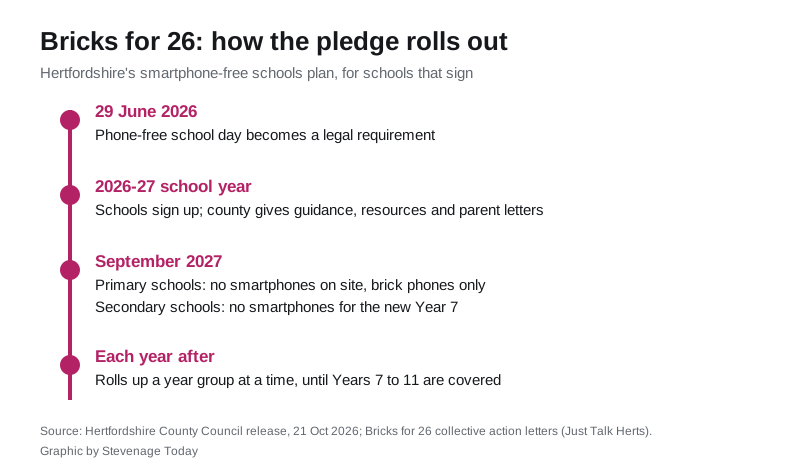
Primary schools would allow brick phones only and secondaries would bar smartphones for Year 7 from September 2027, under the county's Bricks for 26 pledge.
Schools in Stevenage and across Hertfordshire are being asked to sign a pledge that would keep smartphones out of primary schools altogether and bar them for every new Year 7 intake at secondary schools from September 2027, Hertfordshire County Council announced on 21 October.
The pledge is called Bricks for 26, after the brick phones (basic handsets that call and text) it allows instead. The county’s ambition is for all primary schools to become smartphone-free and for secondary schools to bring in smartphone-free policies from Year 7, “rolling forward year by year from the 2027/28 academic year”.
Signing is voluntary. Schools are already legally required to be phone-free during the school day: the county’s letter to headteachers dates that to 29 June 2026, when the government’s guidance on mobile phones in schools became statutory. Bricks for 26 goes further, to no smartphones on the school site at all.
What the pledge asks of schools
The detail is in the two collective action letters the council has published for headteachers to sign and return:
- Primary schools: a “no smartphones on site” policy for all primary aged children from September 2027, allowing brick phones only.
- Secondary schools: no smartphones on site for incoming Year 7s from September 2027, allowing brick phones only. The letter says the policy “rolls up over five years, so all incoming cohorts won’t be allowed smartphones until the point there are no smartphones on site for years 7-11 in five years’ time”. Schools that already use phone pouches would carry on using them for older year groups.
During the 2026-27 school year the council says it will give signing schools information, guidance and resources, including template letters for parents, so they can put the change in place from 2027-28. The work is led by the council’s Public Health team with Smartphone Free Childhood and Generation Focus.
Why the county wants it
The campaign follows a county council review of national and international evidence on smartphone and social media use by children, carried out as part of its Joint Strategic Needs Assessment. The council is clear that the figures are from published research, “not Hertfordshire-specific survey findings”. The release picks out these:
- by the age of 14, more than nine in ten young people own a smartphone and use social media;
- one in four children and young people show signs of problematic smartphone use, linked to a greater risk of poor mental health, higher stress, disrupted sleep and poorer results at school;
- teenagers who spend more than three hours a day on social media are twice as likely to experience anxiety and depression;
- 73% of parents say excessive smartphone use causes conflict in the family;
- 80% of the bullying that 8 to 17 year olds experience is online, with one in three children reporting online bullying compared with 15% in person.
The review itself attributes the smartphone ownership figure to a 2025 Nuffield Foundation survey, which put it at 92% by 14.
The county argues the pressure is collective: many parents would like to wait before buying a smartphone but feel pushed when other children in the class already have one. If schools across the county act together, it says, families can make that choice “with confidence”.
The councillors’ and the head’s view
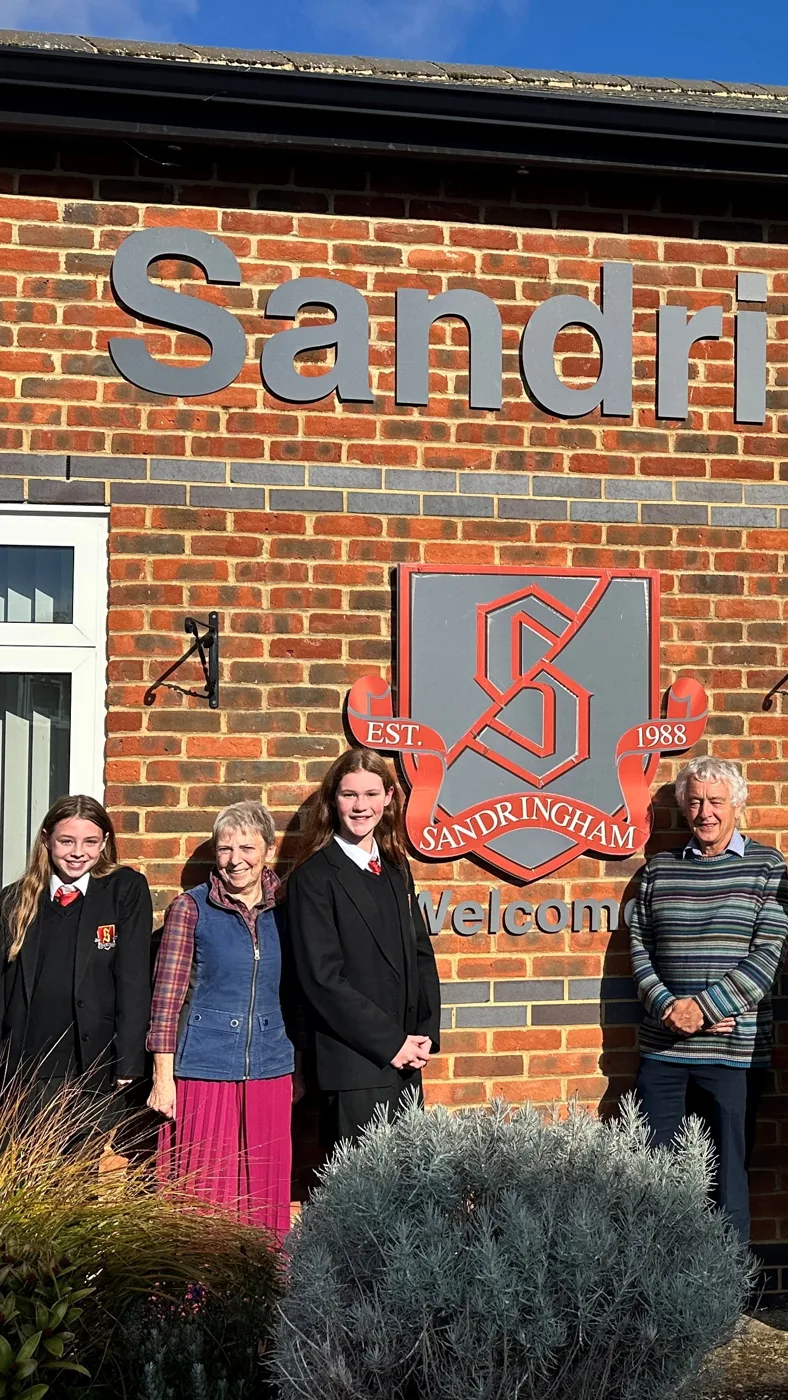
County councillors Anthony Rowlands and Allison Wren visited Sandringham School in St Albans, one of the schools already cutting smartphone use, where Year 7 pupils told them that a smartphone-free school meant fewer distractions in lessons and more time talking to friends face to face.
Councillor Rowlands, the county council’s Children and Young People’s Mental Health Champion, said: “We know technology brings many benefits, but we also know there are growing concerns around issues such as online bullying, poor sleep, mental wellbeing and the amount of time children are spending on smartphones and social media.
“That’s why initiatives like Bricks for 26 are so important. By working together with schools and families, we can help children develop healthy digital habits that support positive mental health, resilience and give them the best possible start in life.
“Many parents tell us they would prefer to delay giving their child a smartphone but worry about their child being the only one without one. Bricks for 26 helps schools and families act together, creating a new social norm that supports healthier childhoods and safer digital lives.”
Councillor Wren, Deputy Executive Member for Community Safety and Public Health, said: “Public health is about creating environments that make healthy choices easier. Bricks for 26 applies that principle to the digital world by supporting schools and families to work together around a shared approach to smartphone use.
“This initiative takes a practical and balanced approach to a challenge that many parents and professionals are grappling with. It recognises the benefits technology can offer while helping children avoid some of the risks associated with early access to smartphones and social media.
“We want children to enjoy the benefits of technology while developing healthy digital habits, strong friendships and positive wellbeing.”

Mark Nicholls, headteacher at Sandringham School, said: “As with all schools, we want our pupils to enjoy all the opportunities that technology can bring, while ensuring they are protected from some of the challenges that can come with early smartphone use.
“Signing the Bricks for 26 collective action pledge reflects our commitment to supporting children’s wellbeing and creating a school community where healthy relationships, face-to-face communication and learning can flourish.”
How far it has got
On 21 October the council’s Just Talk Herts page listed two schools as signed up to the pledge: St Nicolas C of E VA Primary School and The William Ransom Primary School. Sandringham’s headteacher has signed it too, with the two councillors looking on, as pictured above. Heads from Sandringham, St George’s and Ashlyns described their own move to smartphone-free in a webinar the county ran in June with Generation Focus:
What it means for you
- If your child starts Year 7 in September 2027 (they are in Year 5 now), their secondary school may not allow them a smartphone on site, if it signs the pledge. A brick phone would be allowed. Ask the school whether it plans to sign.
- If your child is at primary school, a signing school would allow brick phones only from September 2027.
- Schools can sign and get the resources through Just Talk Herts.
- Parents can also sign the national Smartphone Free Childhood Parent Pact, which the council recommends as a way for families in the same class or school to agree to wait together.
Have your say